
Sharing is caring! Help us grow the Strive community!
Weightlifting Shoes: The Importance of Proper Footwear for Powerlifting and Weightlifting
I have always preached to my clients about wearing the correct footwear during lifting sessions in regard to weightlifting shoes. In particular, exercises like Deadlift, Back Squat and Romanian Deadlift require flat shoes that enhance performance. I see so many people do these exercises in running trainers and it infuriates me. Let’s talk about why you need the correct footwear for performance. Weightlifting is a sport that requires strength, technique, and stability. When lifting heavy weights, it’s essential to have the right gear to ensure maximum performance and avoid injury.
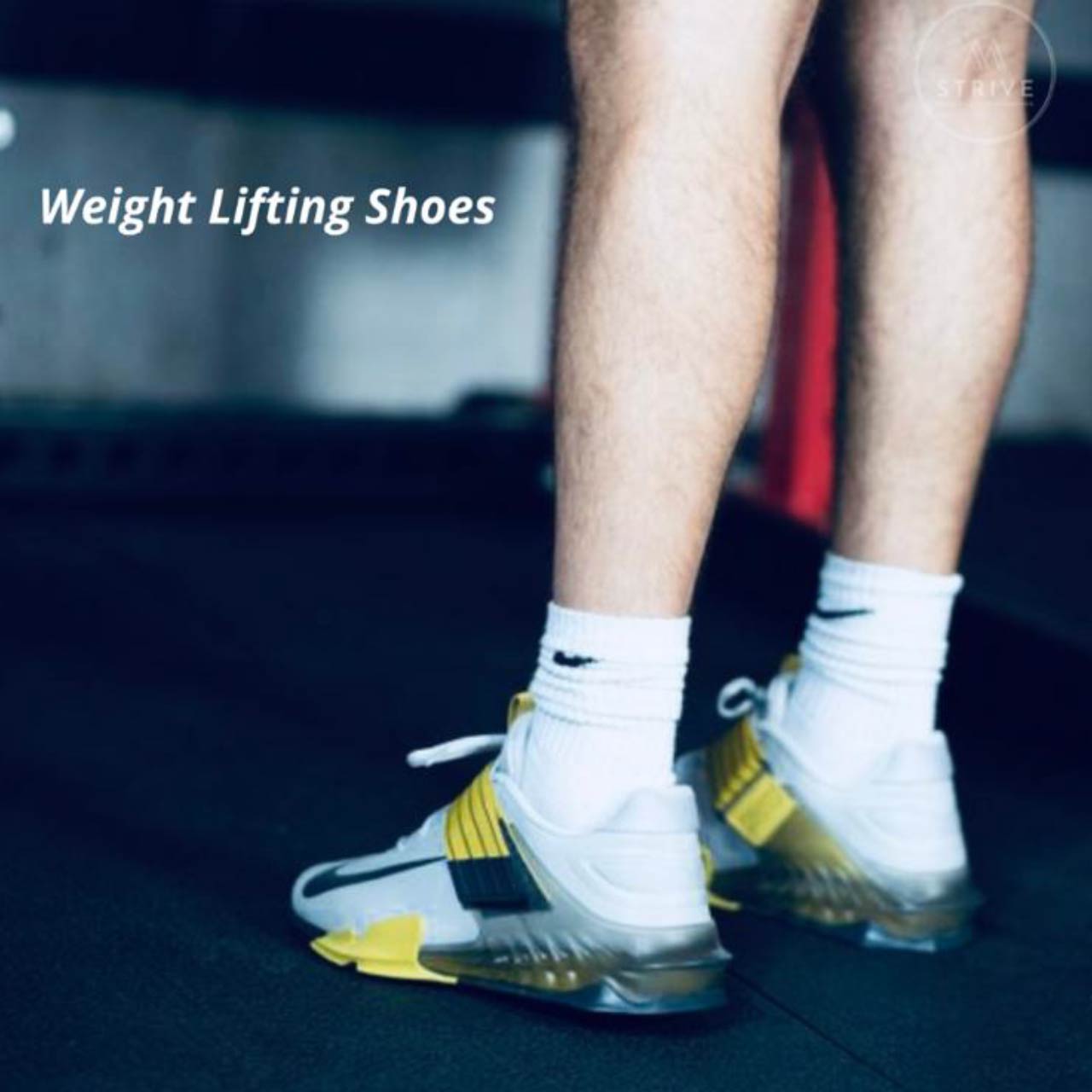
Weightlifting shoes are designed specifically for powerlifting and weightlifting exercises. They offer several advantages over regular athletic shoes, including:
- Increased Stability: Weightlifting shoes have a solid and flat sole that provides a stable base for lifting. The soles are also made of a dense material that does not compress, unlike regular athletic shoes. This helps to transfer force from the feet to the barbell, resulting in better lifts.
- Improved posture: Weightlifting shoes have a raised heel that helps to maintain proper posture during squats, deadlifts, and other lifts. The raised heel allows the lifter to keep their chest up and maintain a more upright position, reducing the risk of injury.
- Better grip: Weightlifting shoes have a non-slip sole that provides excellent grip and traction, allowing the lifter to stay in place while lifting. This helps to improve balance and stability, reducing the risk of injury.
When choosing weightlifting shoes, it’s essential to consider the following factors:
- Fit: Make sure to choose a pair of shoes that fit well and are snug without being too tight. Shoes that are too loose can cause instability, reducing performance and increasing the risk of injury.
- Heel height: Weightlifting shoes come in different heel heights, ranging from 0.5 inches to 1.5 inches. Choose the heel height that works best for you and your lifting style.
- Material: Weightlifting shoes are typically made of leather, synthetic materials, or a combination of both. Choose a pair of shoes that are durable and provide excellent support and stability.
- Brand: With there being so many brands, it can be tough to choose the right brand. Popular branding like Nike, Adidas, Reebok are always good choices. Do some research before purchasing and make sure they suit the goal you are aiming for with training.
These points demonstrate that weightlifting shoes are a critical piece of equipment for powerlifters and weightlifters. They offer increased stability, improved posture, and better grip, helping to improve performance and reduce the risk of injury. When choosing weightlifting shoes, make sure to consider fit, heel height, and material to ensure the best results. If you want to learn more about lifting shoes, there is a fantastic podcast on Spotify by Squat University. The episode is called “Why your shoes suck” and it expands on some of the topics I have covered above.
If you enjoyed this article please check out another one of Strive’s posts about weightlifting, “Is Weight-Lifting the Same for Men and Women”, “The Beginners Guide For Weight-Lifting” and “Weightlifting for Women: Benefits, Precautions and Tips”.
Thanks for reading,
Matthew.
Feel free to return to the homepage here.